
Contrail research programme
Read the contrail research briefing
Cutting contrail warming at the fuel: a research programme seeking partners
A one-page briefing on the research programme: why contrails and why fuel, why our programme, the policy timetable, the published evidence, the upside potential and what we are asking for.
- One page, October 2026, to read online
- For engine, airframe, fuel and research partners
For the full story, see the contrail research programme on our warming page.
Thank you
We are emailing you a personal, secure link to read the briefing. It opens in your browser and works for 30 days.
If it has not arrived within a few minutes, please check your junk folder.
If you would like to talk about taking part: partner@circulairity.co
Notes
Read our oil forecast
What’s in an oil forecast – and why does it matter for SAF?
Our oil price note: the first step from crude oil to your jet fuel or SAF decision. It sets out how SAF and oil markets connect, reviews how influential oil forecasts have performed one and two years ahead, and gives our own long-range view of Brent to 2050, with the drivers and signals behind it.
- Eight pages, October 2026, to read online
- For jet fuel and SAF developers, investors and related market participants
For the market forces behind your own decision, see Market Signals.
Thank you
We are emailing you a personal, secure link to read the forecast. It opens in your browser and works for 30 days.
If it has not arrived within a few minutes, please check your junk folder.
If you would like to discuss it with us: action@circulairity.co
News
News from CirculAIRity
Partnerships, appointments, events and comment on aviation fuel and its climate impact. Click any story to read it in full.
2026
28 October 2026
Introducing CirculAIRity Signals
A tested verdict for any jet fuel or SAF decision, from the molecule to the market.
Today we launch CirculAIRity Signals: independent, evidence-backed verdicts for the decisions that jet fuel and SAF buyers, producers, lenders and policymakers have to defend.
Every Signal starts with the client’s question and ends with a verdict: proceed, wait, move or stop. Alongside it come a central case with its range, the reasons for the verdict, the developments that would change it, and how sure we are, with every source graded.
Seven Signals
Market, Project, Capital and Policy Signals cover prices, plants, investment and the rules that shape them. Production and Logistics Signals cover which fuels to make and how to get them from plant to wing. A seventh, measuring the cost of each lever per tonne of warming avoided, is in development.
Tested, not asserted
We test ourselves against outcomes. We forecast a year we had not used, then compared the results with what happened: our 2025 market forecast, made from 2024 data, passed 10 of 10 benchmark checks. We will publish the test record each year, misses included.
We hold one market view for every client and declare our interests. If you have a decision to make, ask us for a complimentary Signal at action@circulairity.co.

September 2026
Cutting contrail warming at the fuel: our research programme seeks partners
We are seeking partners to physically test jet fuels, tuned at production, designed to cut contrail warming.
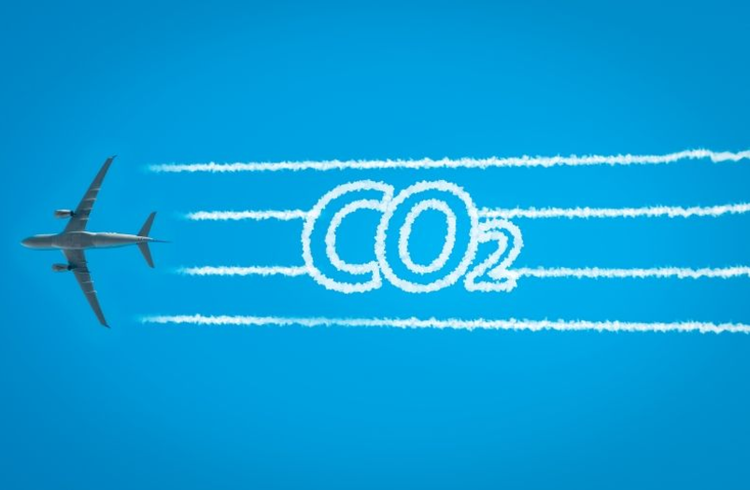
Contrail cirrus is the largest single part of aviation’s warming: 57% of its net effective radiative forcing in 2018 (Lee et al. 2021). Most of it comes from a few flights: 80% of contrail warming is caused by 2% of flights (Teoh et al. 2024).
Contrail ice forms mainly on engine soot. Fewer soot particles mean fewer, larger ice crystals, and thinner, shorter-lived contrails. Published studies show cleaner-burning fuels cut soot and contrail ice substantially (Voigt et al. 2021; Märkl et al. 2024).
A fuel lever for every flight
Re-routing and changes of altitude help, but they reach few flights today. A fuel lever acts on every flight an aircraft makes. Our programme tests whether specification-compliant jet fuel, tuned at production, can cut contrail warming. It works for SAF and fossil jet fuel, and needs no new aircraft, engines or airport infrastructure.
Testing in phases
The programme moves through engine test beds, independent ice-nucleation testing, and contrail modelling of the warming avoided, with go/no-go gates agreed with partners before each step. Our composition work has been reviewed and found credible; physical tests are still to come.
We see this working alongside SAF, not instead of it. To take part, request the contrail research briefing or email partner@circulairity.co.

August 2026
One unit for all of aviation’s warming
Why we report climate results in tonnes of CO₂-warming-equivalent, with the period declared.
Aviation warms the climate through CO2 and through shorter-lived effects, above all contrails. The reference assessment of aviation’s climate impact found that aviation is warming the climate at about three times the rate of its CO2 alone (Lee et al. 2021).
Policy, airlines and fuel programmes will increasingly need to compare unlike things: CO2 from fuel, contrails, re-routing, new fuels and new engines. That needs one unit.
What tCO2-WE measures
Tonnes of CO2-warming-equivalent (tCO2-WE), from the GWP* method developed at the University of Oxford, express any emission or effect as the CO2 that would cause the same change in global temperature. GWP100 (tCO2e), today’s compliance unit, treats a year of contrails as a brief pulse, so it counts a lasting cut in contrails lightly.
How we report
We report climate results in tCO2-WE over a declared 30-year period, with tCO2e alongside, so every figure can be read in the unit a regulator uses. GWP* has its critics, and we say so: we declare the baseline and period every time, and show the ranges, because contrail science is still uncertain.
Since 1 January 2025 the EU has required non-CO2 effects to be monitored and reported, and the European Commission reports by the end of 2027. Read more on our Sustainability page.
2025
14 July 2025
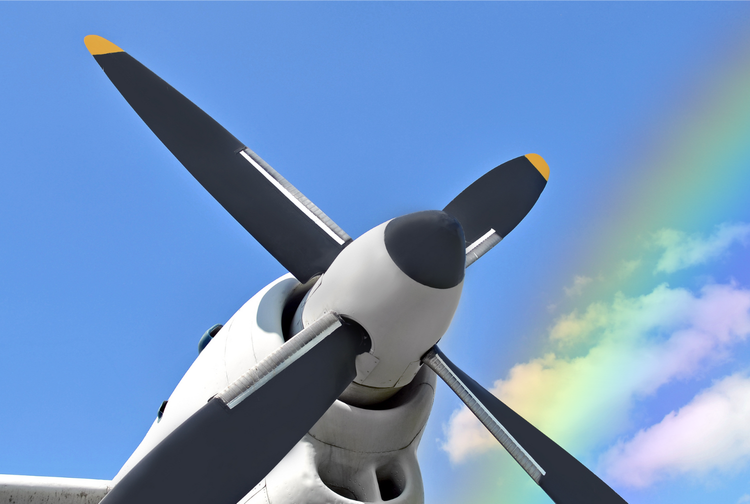
Embracing the rainbow: exploring hydrogen’s role in decarbonising aviation at regional airports
With hydrogen considered a key element in decarbonising aviation, regional airports are likely to provide proving grounds for critical related technologies. Article by Paul E Eden, Regional Gateway, July 2025.
8 July 2025
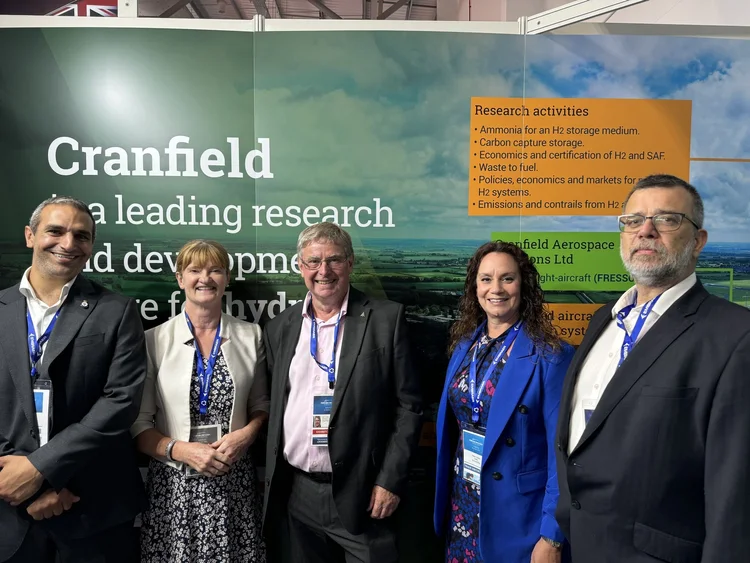
Cranfield University signs Memorandum of Understanding with CirculAIRity
CirculAIRity and Cranfield University have signed a Memorandum of Understanding forming the basis for the two organisations to work together on multiple projects.
19 March 2025
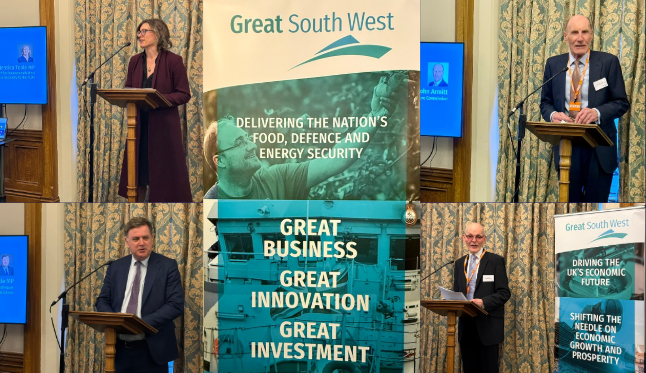
CirculAIRity CMO joins ‘Investing in the Great South West’ event at the House of Commons
On 18 March our Chief Marketing Officer, Helen Webb, attended the ‘Investing in the Great South West’ event at the House of Commons.
13 March 2025
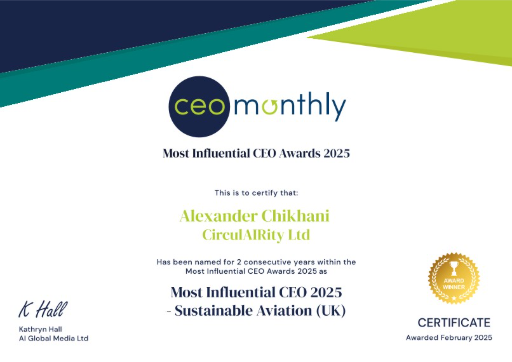
Alex Chikhani named Most Influential CEO 2025, Sustainable Aviation (UK)
Our CEO Alex Chikhani has been presented with the Most Influential CEO Award for Sustainable Aviation in the UK for 2025.

18 February 2025
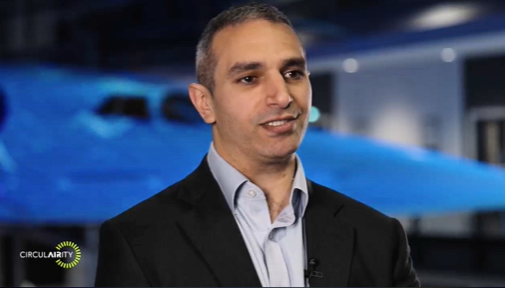
Think Global, Make Local: CirculAIRity’s vision for sustainable aviation fuel
An interview between Alex Chikhani, CEO of CirculAIRity, and Dirk Singer, Sustainability in the Air.
16 January 2025
CirculAIRity tackles aviation’s fossil fuel dependency with innovative synthetic SAF
Alex Chikhani MBA, CEO of CirculAIRity, on energy transition in the aviation fuel landscape.
9 January 2025
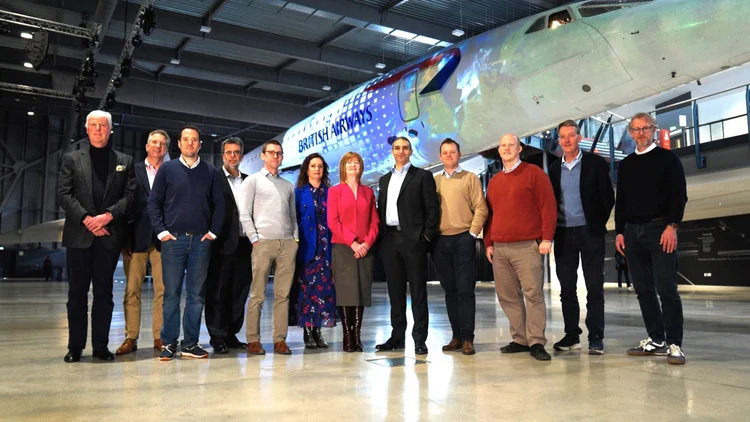
CirculAIRity: proud to be based in Bristol
CirculAIRity is proud to originate from Bristol, which has a long heritage in aviation.
2024
26 November 2024
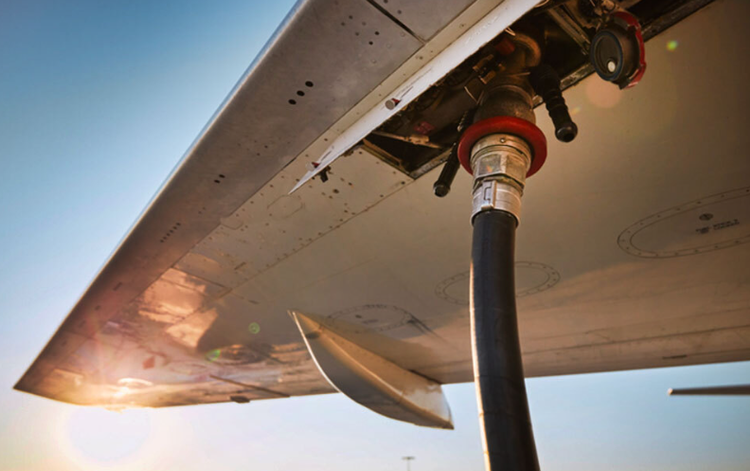
New Jet Zero Taskforce announced
On 25 November 2024 the Transport Secretary, Louise Haigh MP, launched the new Jet Zero Taskforce.

22 July 2024
Dame Sue Gray appointed Chair of CirculAIRity
CirculAIRity Ltd announces the appointment of Air Marshal Dame Sue Gray, DBE CB MSc FREng FIET, as Chair of the Board.
9 May 2024
UK SAF Mandate published
In April 2024 the UK’s SAF Mandate was published: a significant step forward in support of aviation’s energy transition.

4 March 2024
The dawn of third-generation SAF
The evolution of SAF production has blurry lines, and the world has so far seen the first and second generations of SAF production.
Resources: the contrail research briefing, an oil forecast and news